Why Are My White Rocks Turning Yellow? (And Do White Pebbles Stay White?)
Yellow white rocks are almost never the pebble changing colour. It is tannin, iron, soil water or a stone that was cream in the bag. Here is how to tell which, whether white pebbles stay white in a UK garden, and how to get the brightness back.
Why are my white rocks turning yellow? Because something stained the surface or the pores — or because the rock was never a true white. Outdoor pale stone in Britain picks up a tea-coloured film from leaves, an ochre stain from iron in water or soil, or a dirty cream look when dust and algae dry in the sun. The mineral itself, if you bought a pure marble, is still white underneath.
That is the same distinction behind the root question do white pebbles discolour. This page isolates the yellow problem: do white pebbles get dirty, is white rock hard to keep clean, do white pebbles stay white, does white gravel stay white, and how to get white rocks white again when the stain is yellow rather than green.
A handful of Snow-White Thassos Marble Pebbles rinsed and dried is the control sample. If those come up bright and your bed does not, you are looking at film or groundwork, not a defective stone. If a “bargain white” handful dries cream, you bought cream. Pair a genuine white with Natural Stone Sealer & Water Repellent and yellowing becomes a rinse, not a personality of the garden.
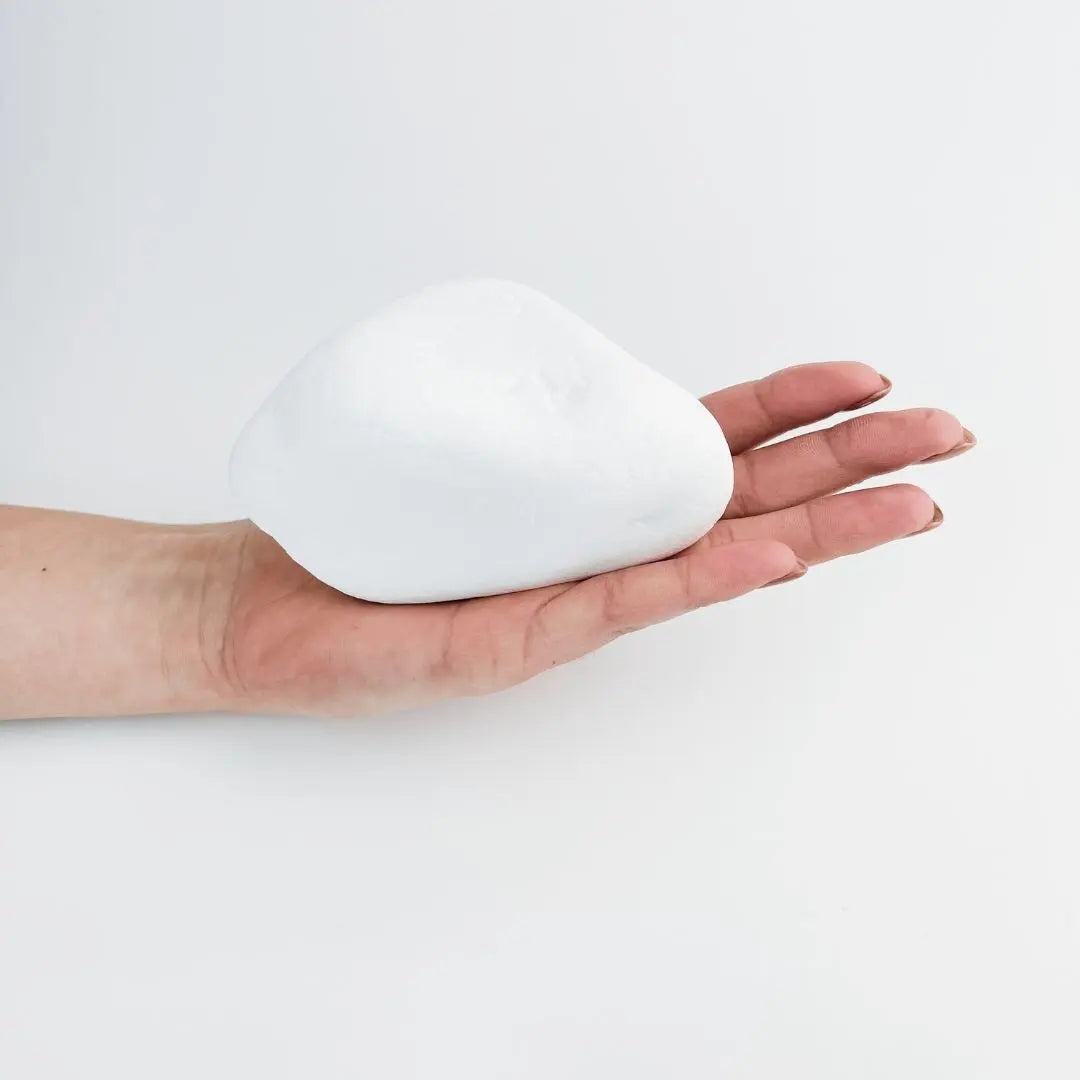
Yellow-stain kit

- Control stone
- Thassos marble
- Typical cause
- Leaf tannins, not rust
- Rinse test
- Wash a handful, dry in sun
- If still cream
- Wrong stone, not dirt
- Hard to keep clean?
- Only in shade + trees
- Lock-in
- Invisible 5 L sealer
Do White Pebbles Get Dirty?
Yes. Every outdoor white pebble gets dirty. Dirt is not a product defect; it is what happens when a pale, slightly porous surface lives under British weather. Dust blows in. Lawn clippings land. Oak and horse-chestnut leaves sit through a wet week and dye the top faces tea-brown. Algae paints a green-grey film in shade. None of that means the pebble “went off” in the bag.
What people mean by dirty, though, varies:
- Surface dust — grey when dry, brightens the moment you wet or rinse it. Cosmetic, five minutes with a hose.
- Organic film — yellow, brown or green that clings after a rinse. This is tannin, algae or soil colloids in the pores. Needs a proper wash.
- Staining from below — patchy ochre or mud, worst where membrane failed. The dirt is wicking up, not falling down.
- The stone’s own colour — still yellow or grey when a washed handful is bone dry. That is not dirt. Cleaning will not fix it.
So yes, white pebbles get dirty. A pure grade such as Snow-White Thassos gets visibly dirty because there is nowhere for grime to hide — and that is also why it photographs so well when you look after it. A grey-cast gravel hides dirt by already looking dirty. That is not easier maintenance. It is lower contrast.
The rinse-and-dry test is the whole diagnosis. Take a stained handful, wash it in a sieve until the water runs clear, and leave it on a white plate in the sun. Bright white when dry: you have a maintenance job. Cream or grey when dry: you have a buying job. Do this before you order a second tonne or a gallon of bleach.
Why Are My White Rocks Turning Yellow?
Yellow is a colour family, not a single cause. Treat the wrong one and you will bleach a rust stain into a worse rust stain, or vinegar-etch marble that only needed the leaves raking off. Work through this table before you clean the whole bed.
| Yellow you see | Likely cause | Clues | Fix |
|---|---|---|---|
| Tea / tobacco patches on the top faces | Leaf, bark and seed tannins | Trees overhead; worst in autumn; stones under the drip line | Clear debris weekly; wash; seal |
| Even creamy cast over the whole bed | Stone was never pure white, or dust film | Looks the same on a washed, dried handful | If it washes off, rinse. If not, switch to Thassos |
| Rusty orange streaks | Iron — from soil, borehole water, fertiliser, or corroding edging | Follows water flow; worse after irrigation; metal pins nearby | Stop the iron source; rust remover labelled for stone; do not acid-wash marble |
| Mustard or olive yellow, slippery when wet | Algae starting, or algae mixed with dust | Shade, poor drying, north side | Algae cleaner; sun and airflow; see stay-white guide |
| Yellow only where the bed meets soil or lawn | Soil fines wicking, no membrane, or grass clippings | Edges worse than the middle | Re-lay 95gsm+ membrane; edge the bed; wash |
| Yellow after a “vinegar clean” | Etch + leftover organics, or iron mobilised by acid | Matt, chalky, worse than before | Stop acids; rinse; seal; replace the worst stones — vinegar guide |
Tannins are the usual UK culprit
Oak, walnut, horse chestnut, pine needles and many shrubs leach polyphenols when they sit wet on porous marble. The stain looks exactly like tea because it is chemically related to tea. It binds in the pores of unsealed calcite. That is why a sealed 30–60 mm Thassos bed under the same tree yellows slower: the tannin sits on a treated face and rinses off with the next rain or hose-down.
Iron is less common, and nastier
Iron staining is orange rather than tea. It comes from rusty steel edging, cheap wire pins, well water, some lawn feeds, and iron-rich clay under a torn membrane. Acid cleaners (vinegar, brick acid) can set iron into marble. If you suspect rust, use a rust remover written for natural stone and fix the metal or the water source, or the yellow returns on the next irrigation.
Hard tap water leaves a different mark: a crusty white-grey scale, sometimes with a yellow edge where dust sticks to it. That is mineral deposit, not the pebble yellowing. A silica stone can take a cautious descaler; marble cannot. On Thassos, repeated fresh-water rinses and sealing do more than any acid.
Do White Pebbles Stay White? Does White Gravel Stay White?
They stay as white as the stone you bought, the site you gave them, and the routine you keep. That is not a fudge. It is the honest range:
- Indoors, in pots, away from rain — yes, almost effortlessly. 10–30 mm Thassos on a houseplant stays the colour it arrived.
- Open, sunny, well-drained bed, 95gsm+ membrane, sealed — yes, for years, with a quarterly hose and an annual wash. This is the setup in the photos people pin.
- Under trees, on the north side, no membrane, unsealed bargain gravel — no. It will look tired by the first autumn. That is a specification problem, not a law of white stone.
White gravel behaves the same way as white pebbles because it is the same minerals in a smaller grade. Snow-White Thassos gravel stays white on the same terms as the pebbles. A grey-cast “arctic white” gravel looks greyer when wet from day one — that is not yellowing, and it will not “weather back to white”. Compare grades in types of white garden stones.
Does white gravel stay white is often a buying question in disguise. Finer gravel has more surface area per square metre, so it shows dust and collects leaf mash in the gaps. Pebbles shed debris more easily and are quicker to rinse. If your priority is a bed that still looks crisp after a windy October, a 30–60 mm pebble usually stays visually cleaner than a 4–8 mm gravel of the same stone. If your priority is a tight, formal dressing against paving, gravel is the right texture — just budget a more frequent blow-over.
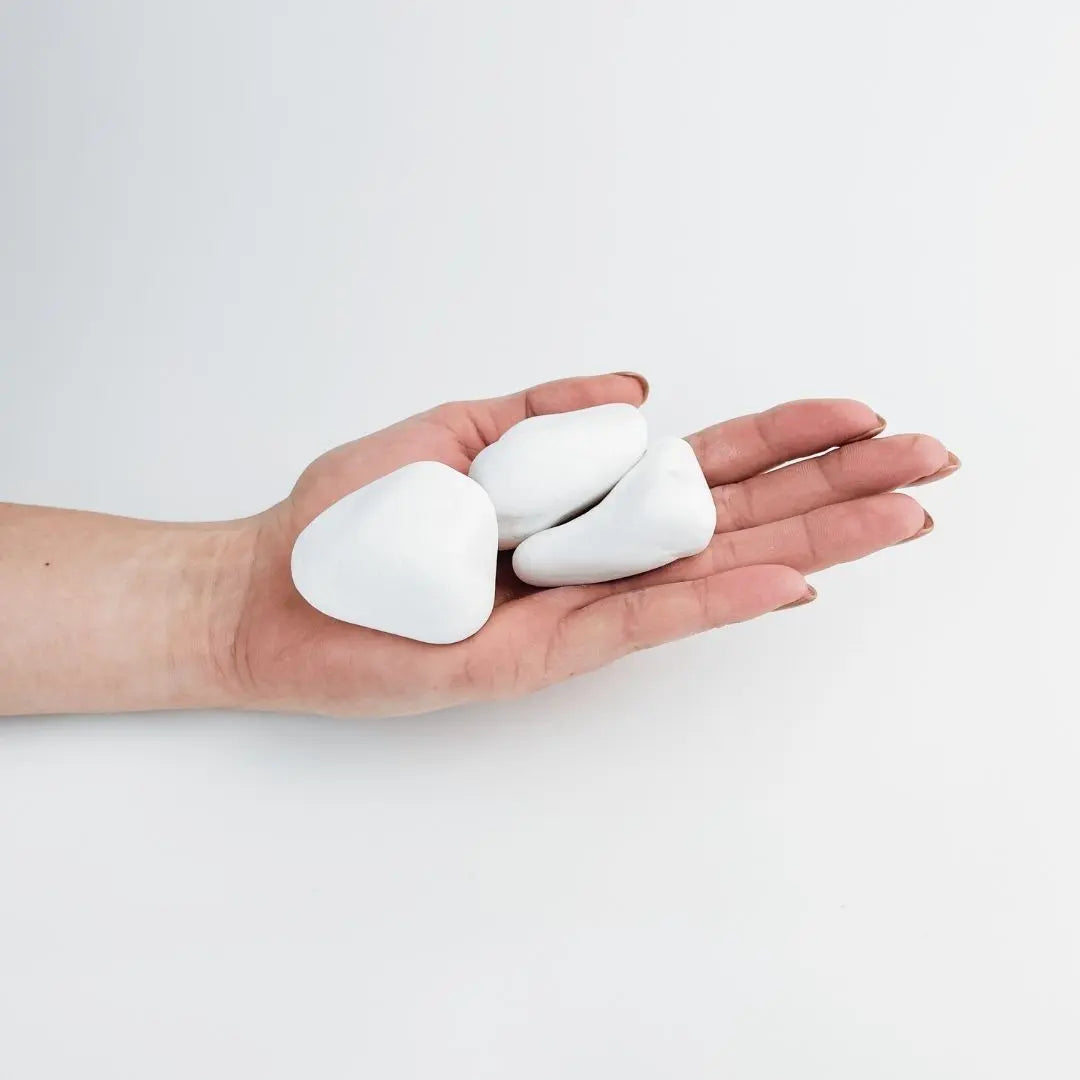
Size is a cleanliness decision, not only an aesthetic one. Fine white gravel yellows in the joints first because organic slurry sits there. Larger pebbles drain and dry faster.
If you already have yellowing gravel and a washed handful still dries cream, topping the bed with Thassos pebbles is a faster visual reset than trying to bleach colour that is in the rock.
Is White Rock Hard to Keep Clean?
Harder than dark stone. Easier than most people fear — if the groundwork is right. White rock does not create dirt. It reports dirt. That visibility is the maintenance. A black basalt bed can carry the same algae and you will not notice until it is slippery.
Realistic time for a sealed Thassos border in a reasonably open UK garden:
| Task | How often | How long |
|---|---|---|
| Blow or rake off leaves and catkins | Fortnightly in autumn; monthly otherwise | 5–10 minutes |
| Hose rinse | Quarterly, or after a heavy pollen / seed fall | 15 minutes |
| Stone-safe wash + algae treatment | Once a year, or twice in deep shade | An afternoon |
| Re-seal | Every 2–3 years, when water stops beading | A dry morning |
That is less work than a small lawn. It is more work than a bed of dark slate you never look at closely. The people who find white rock “impossible” usually have one of four setup errors: no membrane, a dripping canopy they will not prune, a grey-cast stone they expected to behave like marble, or a weekly vinegar habit that keeps opening the pores.
If you want white with less reporting of dirt, two honest options: put the brightest stone in the sunniest, most seen places (front path, courtyard, pots) and use a mid-tone elsewhere; or choose a slightly warmer white such as Bianco Carrara gravel where a hint of grey veining disguises dust without looking muddy. For a hard-wearing pale that shrugs off some staining, white polished quartz pebbles are less porous than marble — they will not match Thassos for purity, but they forgive neglect a little more.
Pets and children change the equation. White pebbles show muddy paws and dropped snacks. They are still a good surface — just not the one to put under the back door if the dog comes in wet three times a day. Move the crisp white to the display border and use a mid-grey path where the traffic is.
How to Get White Rocks White Again
Once you know you are dealing with film, not inherent colour, restoration is mechanical and chemical in that order. Do not start with bleach on a bed that only needs a rake.
The best way to clean white garden pebbles when they have gone yellow
- Clear the fuel. Every wet leaf you leave is a new tannin patch. Get the surface empty.
- Rinse to see the real stain. Hose or wide-fan pressure wash. A surprising amount of “yellow” is just dust glued on with last week’s drizzle.
- Treat what is left. For tea-coloured organic film on marble, a stone-safe outdoor cleaner or oxygen bleach on a lifted batch. For green-yellow slime, an algae remover. For rust orange, a rust product labelled safe for natural stone — not vinegar. Full household-cleaner rules: vinegar and bleach guide.
- Rinse until the run-off is clean, and push dirty water off the bed, not back into it.
- Dry and judge in daylight. Wet stone always looks more stained. Decide when it is dry.
- Repair membrane and edging anywhere soil still shows or grass clippings blow in. Otherwise you are scheduling the same afternoon next spring.
- Seal on a dry day with invisible water-repellent. This is the step that turns “I got them white again” into “they stayed white”.
Small areas — pots, graves, a metre of threshold — are faster to wash in a sieve than to treat in place. Lift, rinse, optional oxygen-bleach soak, rinse, dry, seal, put back. That is the satisfying “they look new” job people post photos of.
Large areas should stay in place. You will not lift 400 kg for fun. Clean in situ, then consider a thin top-dress of fresh 60–100 mm or 30–60 mm Thassos so the visible layer is new stone on a cleaned base. Landscapers do this instead of pretending a ten-year-old dusty gravel will photograph like a show garden.
If they will not come white, stop washing. A dry, clean handful that is still yellow or grey is the stone’s colour. More bleach will not invent Thassos. Replace the top layer with Snow-White Thassos Marble Pebbles and keep the old stone in a less visible utility bed if you cannot bear to waste it.
How to Stop White Rocks Yellowing Again
Cleaning without changing the site is a subscription. Prevention is a specification.
- Get leaves off while they are dry. A two-minute blow-over beats a November tannin bath. This is the highest-return habit on any pale stone.
- Give the bed sun and air. Prune the dripping skirt of a tree even if you will not fell it. Stone that dries by lunchtime yellows slower than stone that stays wet until Thursday.
- Membrane, then membrane again. 95gsm woven, overlapped 150 mm, pinned. Replace torn sheets when you lift a corner to wash. Soil water is a yellow dye.
- Edge it. A steel, stone or timber edge stops lawn soil migrating and makes the leaf-blow possible. An un-edged white bed becomes a dirty halo.
- Watch the metal. Galvanised pins are fine. Bare steel offcuts and rusty leftover rebar are not. Swap them before you blame the pebbles.
- Mind the irrigation. Iron-rich borehole water and fertiliser spray on white marble is how even beds go ochre. Water the plants, not the stones, and keep feeds off the pebble face.
- Seal. Natural Stone Sealer does not make stone magic. It makes tannin and dust a surface problem. Re-coat when rain stops beading.
- Buy white that is white. Prevention cannot rescue a cream gravel. Start with Thassos where the view matters.
For the full placement and algae side of this — green film, shade maps, indoor versus outdoor — use the pillar page do white pebbles discolour. For whether white stone is the right material at all (glare, heat, soil, pebbles versus gravel), see are white pebbles good for the garden.
When to Replace Yellowed Stone Instead of Cleaning It
There is a point where another clean is the expensive option. Replace — or top-dress — when any of these are true:
- A washed, dried sample is still yellow, cream or grey.
- Iron has penetrated so far that rust remover only fades the mark.
- Previous owners used brick acid or years of vinegar and the face is chalky.
- The bed is so thin that soil shows as a permanent dirty tint.
- You are about to photograph or sell the house and you need a one-weekend reset.
Top-dressing is usually enough. Leave the old stone as a hidden base (if it is clean enough not to muddy the new layer), add membrane if it was missing, and lay 30–40 mm of new Snow-White Thassos on top. You have bought a new visible surface without skip-hire.
Full replacement makes sense on a small, precious area — a memorial, a front threshold, a courtyard you see from the kitchen. There, start from a compacted, drained base, fresh 95gsm+ membrane, and stone you have sampled wet in that exact light. A 1 kg sample of Thassos plus a tin of sealer is the cheapest way to know you will like year two, not only day one.
Use the calculator below to size the new layer. At 40–50 mm you are in the 80–100 kg per m² range for tumbled marble. Add about 10% for edges and settling. The link opens a Stones4Gardens cart with the PebbleFinder discount already on it — stone and sealer together, which is how a yellow bed stays a white bed.
Replace the yellow layer — 10% off at checkout
Work out the top-up of Thassos plus sealer. One Stones4Gardens basket, PebbleFinder discount applied.
Typical border is about 40 cm wide — just type the length.
Width is pre-filled for a typical garden border— change it if yours is different.
Fine-tune size, depth and extra stone
Paths, garden borders, pool surrounds
Pick what you’re covering, then enter the size. We’ll pack the bags and sealer for you.
The white that yellows only on the surface
Snow-White Thassos Marble Pebbles rinse back to white. Natural Stone Sealer stops the next autumn’s tannins dyeing the pores. Samples from £6.99, sealer £54.99, free UK delivery via Stones4Gardens.

Snow-White Thassos Marble Pebbles — 10/30 mm
10/30 mm · Sample
Snow-White Thassos Marble Pebbles — 30/60 mm
30/60 mm · Sample
Snow-White Thassos Marble Pebbles — 60/100 mm
60/100 mm · Sample
Natural Stone Sealer & Water Repellent
5 L · Invisible finishPro tips
Diagnose on dry stone, not wet
Wet pebbles always look more stained. Wash a handful, dry it in the sun, then decide if you are cleaning film or replacing cream stone.
Tannin is a leaf problem first
Rake oaks, chestnuts and pine needles off white stone the week they fall. Sealing Thassos then makes the next stain a rinse, not a dye.
Rust orange is not tea yellow
Orange streaks that follow water or metal need a stone-safe rust treatment and a fix to the iron source. Vinegar can lock rust into marble.
White is a reporter, not a slob
If maintenance feels hard, check membrane, shade and stone grade before you blame the colour. Dark stone hides the same dirt.
Frequently asked questions
Why are my white rocks turning yellow?
Most often leaf and bark tannins sitting wet on porous marble, sometimes iron from soil, rusty metal or irrigation, sometimes soil wicking through missing membrane, and sometimes the stone was cream or grey-cast when you bought it. Wash a handful and dry it: bright means film, still yellow means the rock or a deep iron stain.
Do white pebbles get dirty?
Yes. Outdoor white pebbles collect dust, tannins, algae and soil fines. A pure white such as Snow-White Thassos shows that dirt clearly — and also washes back to white if the colour is in the stone, not just the bag name.
Do white pebbles stay white?
Indoors, yes. Outdoors they stay white when the stone is truly white, the bed is sunny and drained, membrane is intact, leaves are cleared, and you seal porous marble. In deep shade under trees with no membrane, no white pebble stays showroom-clean. Full placement notes are on do white pebbles discolour.
Does white gravel stay white?
On the same terms as pebbles — and it shows dust sooner because there is more surface and more tiny gaps. Thassos gravel stays white if you keep debris off and seal it. Budget grey-cast gravel looks greyer wet from day one; that is not yellowing you can wash off.
Is white rock hard to keep clean?
It is more visible than dark rock, not more dirty. A sealed Thassos bed in an open spot is a monthly blow-over, a quarterly hose and a yearly wash — less than a lawn. It becomes hard when you skip membrane, plant it under a dripping canopy, or buy a stone that was never white.
How do I get white rocks white again?
Clear debris, rinse, treat organic film with a stone-safe cleaner or oxygen bleach on lifted stone, rinse, dry, repair membrane, then seal. Do not vinegar marble. If a clean dry sample is still yellow, replace the visible layer with Thassos marble pebbles.
What is the best way to clean white garden pebbles?
Debris off first, then a hose or wide-fan pressure rinse, then a natural-stone-safe algae or patio cleaner, then a full rinse and dry. Seal when they are clean. Household vinegar is the wrong default on marble — see cleaning with vinegar.
Can yellow stains come out of marble pebbles?
Tannin and algae films usually can, especially if you catch them in the first season and the stone was sealed. Deep iron stains and inherent cream colour cannot be washed into Thassos-white. Test a handful before you treat the whole garden.
Why did my white pebbles turn yellow after I used vinegar?
Acid etches marble and can mobilise iron. The surface goes chalky and then re-soils darker. Stop using vinegar, rinse thoroughly, seal what you can, and top-dress or replace the worst of the bed.
Do white garden stones stay white in the rain?
Wet stone always looks a shade deeper. Pure Thassos still reads white when wet; grey-cast gravel looks dirty the moment it rains. If your stones only look yellow when wet and dry bright, you are seeing moisture and dust, not a permanent stain — rinse and seal.
Related guides
Do White Pebbles Discolour? How to Keep Them White & Stop Them Going Green
Yes — outdoor white pebbles discolour from algae, leaves and soil, not because the stone itself changes colour. How to stop it, plus the Thassos marble and invisible sealer that stay brightest in UK gardens.
Read guide →
How to Clean White Pebbles & Garden Stones (and Make Them White Again)
How to clean white pebbles, stones and gravel: remove algae and green, lift dirt and stains, and make dull white stones bright white again — step by step.
Read guide →
How to Clean White Garden Stones with Vinegar (and When You Must Not)
Can you clean white garden stones with vinegar or bleach? What vinegar does to marble, limestone and granite — plus safer ways to make stones look new again.
Read guide →
Are White Pebbles Good for the Garden? Uses, Soil & What to Put Under Them
Are white pebbles good for the garden? Honest UK pros and cons, whether you can put pebbles on soil, pebbles vs gravel, what to put underneath, and the best uses.
Read guide →
Sealing Garden Stones & Pebbles: Why, How and Is It Worth It?
Should you seal garden stones? Honest UK guide to why sealing decorative stone and pebbles helps, how easy it is, and how to apply EKSIL EH17 — a breathable, colour-neutral stone sealer.
Read guide →
Yellow is usually a stain, not a sentence. Start again with stone that is white through the core: Snow-White Thassos Marble Pebbles in 10–30 mm, 30–60 mm or 60–100 mm, plus invisible sealer — or a sample to test in your actual leaf-fall. Calculator above, 10% off at checkout.