Pebbles Around Hot Tubs: Best Stones & Landscaping Ideas
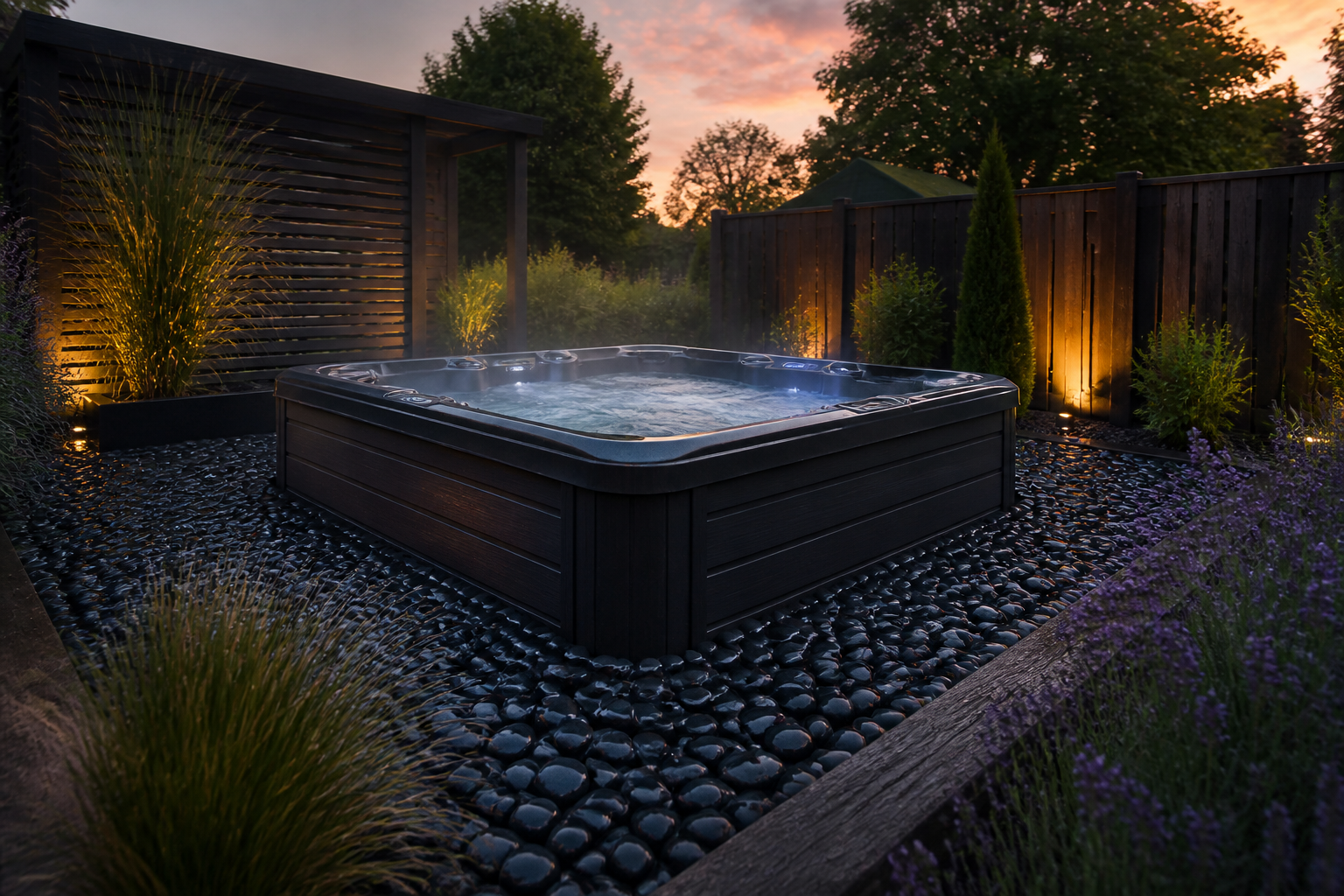
The right pebble surround turns a hot tub from a plastic box on a patio into a garden feature. Here's how to get the base, stone, and planting right.
A hot tub is a significant investment — typically £3,000–£8,000 for a decent 4–6 person model — and the landscaping around it makes the difference between a relaxing retreat and an eyesore plonked on a concrete slab.
Decorative pebbles are one of the most popular surround options for UK hot tubs. They drain freely (critical when water splashes out), look natural, feel pleasant barefoot, and cost a fraction of decking or paving. But there are structural, practical, and aesthetic decisions to get right — especially around the base, which needs to support serious weight.
This guide covers everything: which stones to use, how to prepare the ground, base engineering for a tub that weighs nearly two tonnes when full, and landscaping ideas that turn the area into something you actually want to look at.
Base Requirements: What Goes Under the Tub
Before thinking about decorative pebbles, you need to understand what's happening underneath the hot tub — because decorative stone is not a structural base.
A standard 4-person hot tub filled with water and four adults weighs approximately 1.9 tonnes. That weight concentrated on a 2 m × 2 m footprint creates significant ground pressure. An inadequate base will settle unevenly, potentially cracking the tub shell and voiding your warranty.
Approved Base Options
| Base Type | Cost (approx.) | Best For |
|---|---|---|
| Concrete pad (100 mm, reinforced) | £500–£1,200 | Permanent installations, heavy tubs (6+ person) |
| Compacted gravel pad (150 mm Type 1 + 50 mm 10 mm gravel) | £200–£500 | Most 4-person tubs, good drainage, DIY-friendly |
| Composite hot tub deck pads | £300–£600 | Modular, relocatable, level ground only |
| Paving slabs on mortar bed | £400–£900 | Traditional look, permanent |
Decorative pebbles go around the tub, not under it. The structural base sits beneath the hot tub; the pebble surround fills the landscaped area surrounding it — typically extending 60–120 cm on all sides to create a practical, attractive transition zone.
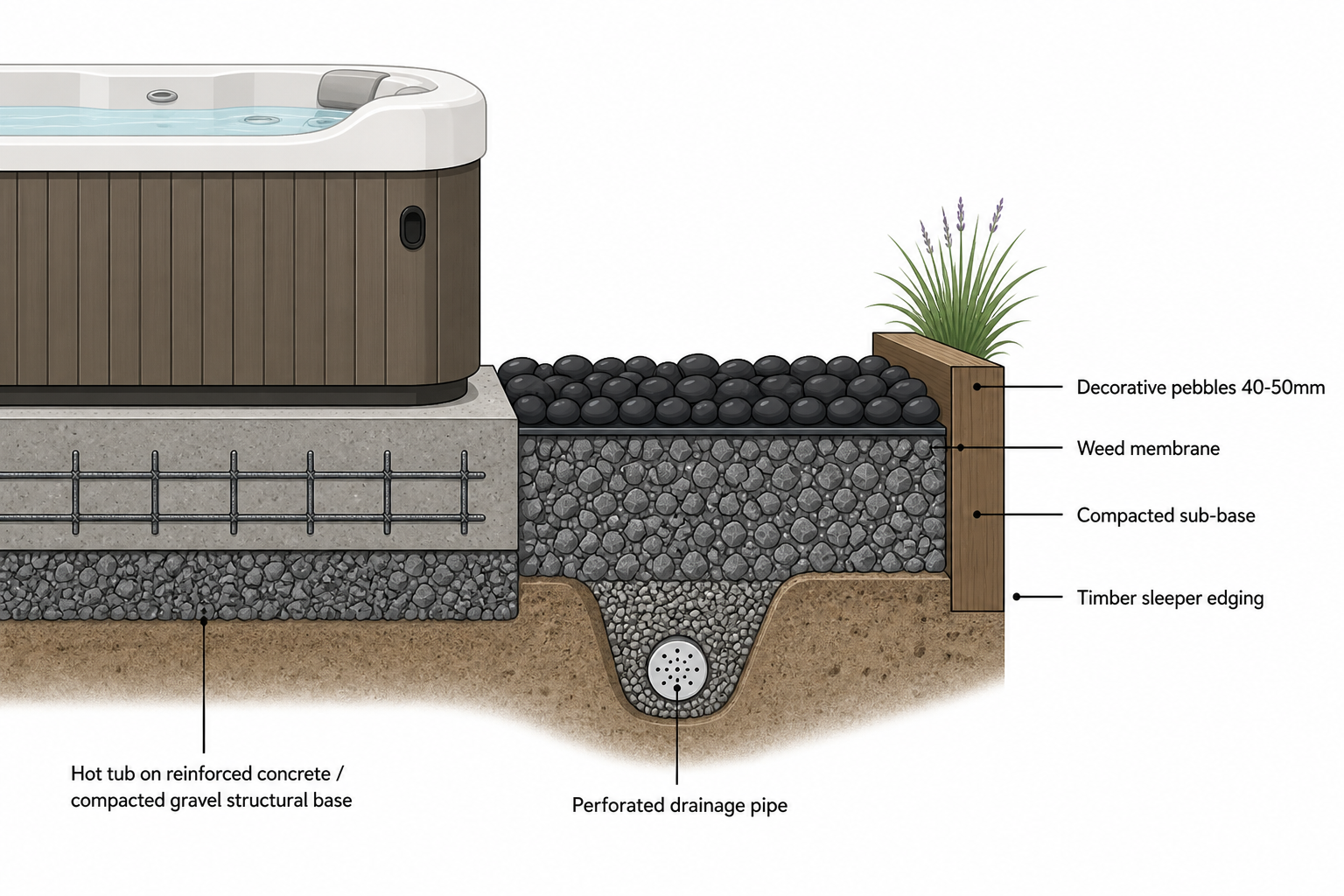
If you're using a compacted gravel base under the tub, the decorative pebble surround can butt directly against it. If you're on a concrete pad, the pebbles fill the gap between the pad edge and your garden boundary.
Best Decorative Stones for Hot Tub Surrounds
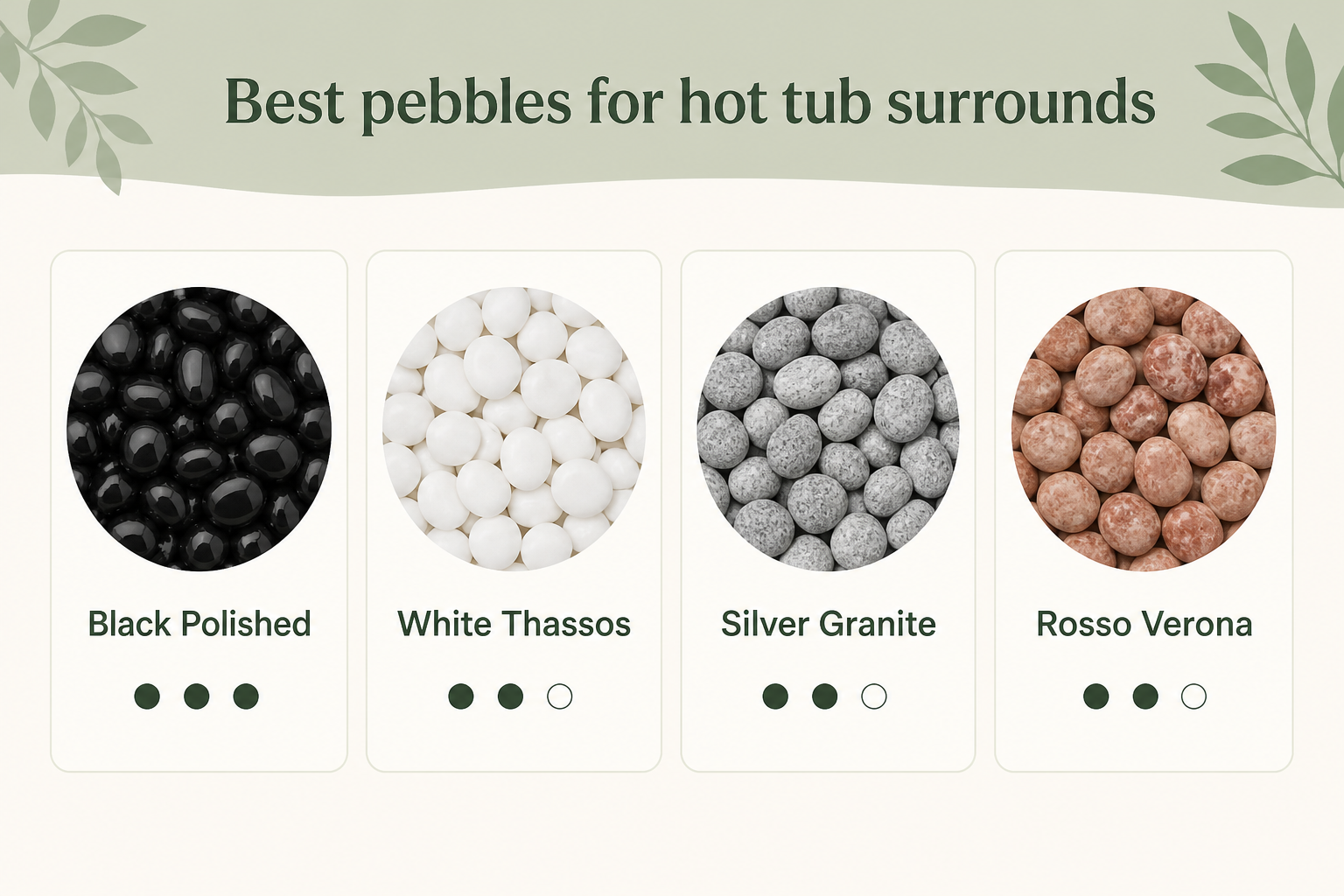
The stone around your hot tub needs to meet three criteria: comfortable barefoot, free-draining, and visually complementary. Here are the best options available from UK suppliers:
| Stone | Size | Feel Underfoot | Look | Price (bulk bag) |
|---|---|---|---|---|
| Black polished pebbles | 20–40 mm | Smooth, warm, spa-like | Glossy black, striking wet | £180–£300 |
| White Thassos pebbles | 20–30 mm | Smooth, neutral | Bright, Mediterranean | £140–£220 |
| Rosso Verona cobbles | 30–50 mm | Smooth, substantial | Warm copper-reds | £160–£280 |
| Silver granite pebbles | 20–40 mm | Smooth, cool | Contemporary, pairs with grey | £130–£200 |
| Golden gravel | 10–20 mm | Slightly textured | Warm, traditional | £90–£140 |
Black polished pebbles are the most popular choice for hot tub surrounds. The dark colour hides splashed water, algae discolouration, and chemical residue. They look dramatically better when wet — which, around a hot tub, is most of the time. For an even more intense gloss, consider our Black High Polished Pebbles — the premium finish creates a true spa-like aesthetic.
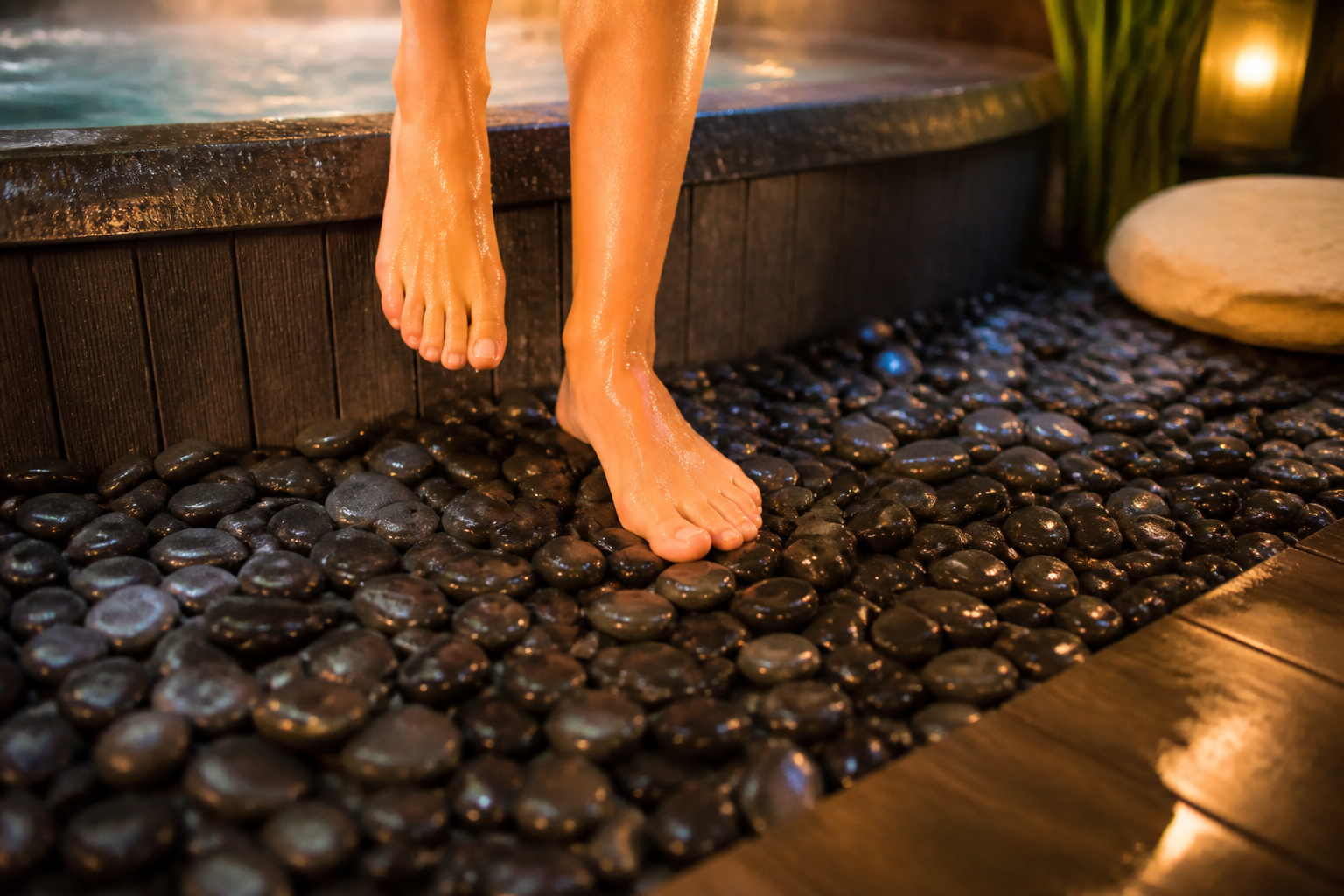
Avoid angular chippings (slate, crushed granite) in the immediate surround. You'll be stepping out of the tub barefoot and wet — angular edges are uncomfortable and can cut softened skin.
Save angular stone for areas further from the tub where shoes are worn, and keep smooth tumbled pebbles for the zone you'll actually stand on.
For a clean, contemporary look, many UK installers recommend a single stone type in one size around the hot tub, with a contrasting edging material (timber sleepers, composite border, or metal edging strip).
How to Install a Pebble Surround: Step by Step
A well-installed pebble surround should last years without settling, sprouting weeds, or turning into a mud bath. Here's the correct method:
Step 1: Excavate
Mark out the surround area — typically 60–120 cm beyond the tub shell on all sides. You need enough room to walk comfortably around the tub for maintenance access. Dig out 10–15 cm of topsoil and level the base roughly.
Step 2: Install Drainage
If the ground is heavy clay, consider running a 60 mm perforated land drain to a soakaway at the lowest point. Hot tubs lose 5–10 litres per session through splashing, and periodic draining puts 1,000+ litres onto the surround. Good drainage prevents the area becoming waterlogged.
Step 3: Sub-Base
Spread 50–75 mm of compacted 20 mm gravel or Type 1 sub-base material. Compact with a plate compactor or hand tamper. This provides a stable, free-draining foundation that stops the decorative stone sinking into soft ground.
Step 4: Landscape Membrane
Lay heavy-duty woven landscape fabric over the compacted sub-base, overlapping joins by 15 cm. Pin down with metal U-pins. This prevents weed growth without impeding drainage.
Step 5: Edging
Install edging before adding decorative stone. Treated timber sleepers, flexible metal lawn edging, or composite boards all work. The edging should sit flush with the final stone surface to contain the pebbles and give a clean line.
Step 6: Spread Decorative Pebbles
Tip the pebbles onto the membrane and rake to an even depth of 40–50 mm. For 20–40 mm pebbles, a bulk bag (approximately 850 kg) covers roughly 8–10 m² at 50 mm depth. A typical hot tub surround of 12–16 m² will need 1.5–2 bulk bags.
Landscaping & Privacy Ideas
The pebble surround is the canvas — what you add around it turns a hot tub area from functional to genuinely inviting. Here are proven combinations from UK garden designers:
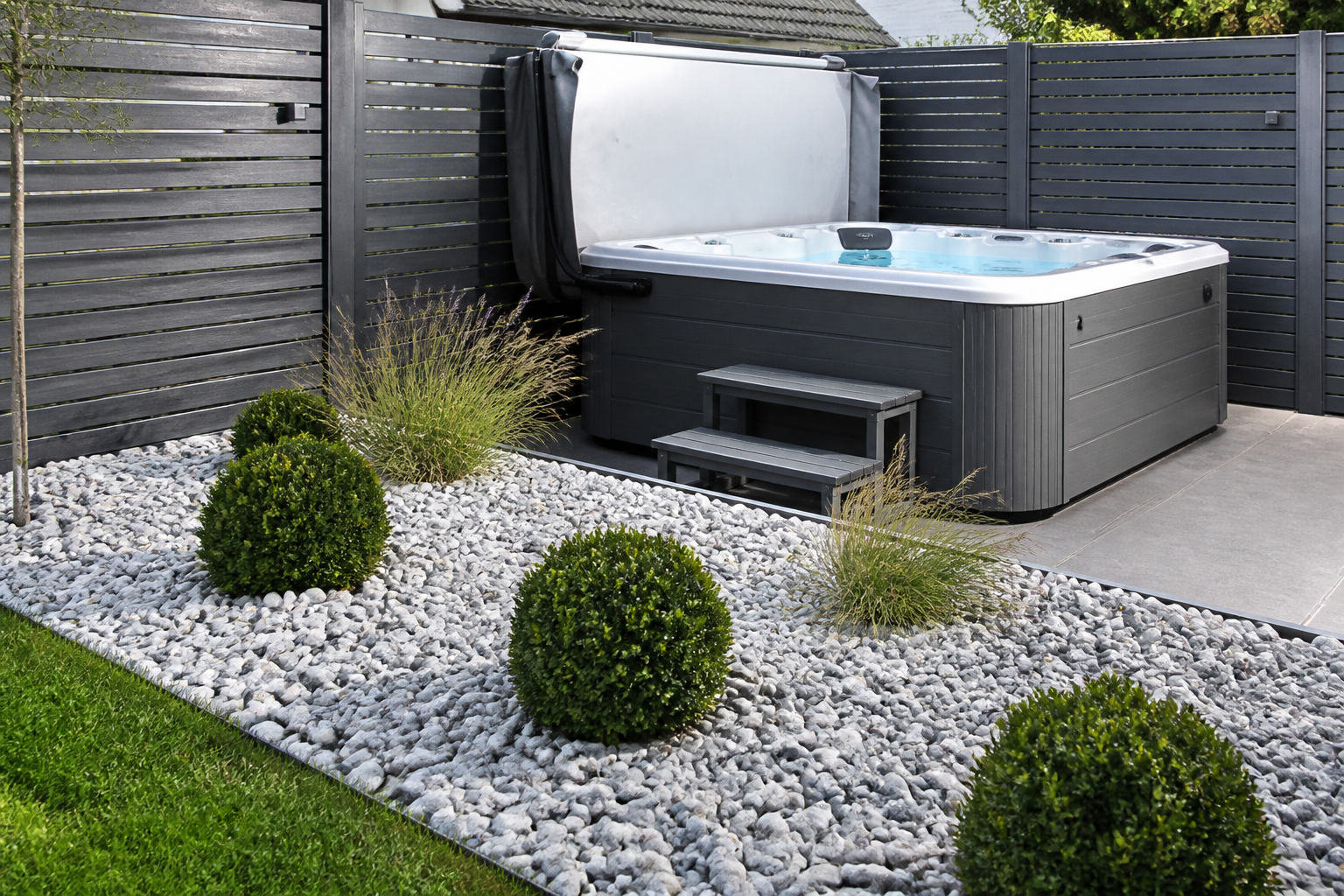
For a modern look, pair cool-toned pebbles with slatted composite screens and evergreen structure planting. The neutral grey palette keeps the focus on clean lines and makes the space feel calm and considered.
Screening, lighting and planting are what elevate a tub from functional to a genuine garden feature — layer all three around the pebble bed.
Privacy Screening
- Bamboo planting: Phyllostachys (clumping varieties only — avoid running bamboo which is invasive). Plant in a root barrier or large pots. Grows 2–4 m tall, evergreen, provides rustling sound and dense screening within 2 seasons.
- Trellis panels with climbers: 1.8 m slatted trellis with jasmine, clematis, or evergreen ivy. Quick to install, provides partial screening immediately with full coverage in 1–2 years.
- Slatted composite screens: Modern, maintenance-free, instant privacy. Typically £80–£150 per panel (1.8 m × 1.8 m). Available in grey, anthracite, and wood-effect finishes.
Lighting
LED strip lighting or solar-powered spotlights embedded in the pebble bed create a dramatic evening atmosphere. Recessed ground lights positioned to uplight surrounding planting work particularly well. Warm white (2700–3000 K) is more relaxing than cool white for a hot tub setting.
Planting in Pebble Beds
Cut holes in the membrane and plant directly through it into the soil beneath. Good choices for hot tub surrounds:
- Ornamental grasses: Stipa tenuissima, Miscanthus — movement and texture
- Fragrant herbs: Lavender, rosemary — release scent when brushed
- Evergreen structure: Box balls, dwarf conifers — year-round interest
Avoid thorny plants (roses, berberis) and anything that drops heavy leaf litter into the pebbles. Deciduous trees overhead will shed leaves into the tub — plan accordingly.
See our laying guide for more detailed installation advice. For a zen-inspired design, combine Black Polished Pebbles around the tub with larger Japanese Multicoloured Pebbles or a garden monolith as a sculptural accent piece nearby.
Pro tips
Keep a 5 cm gap between pebbles and the tub shell
Don't pile stones directly against the hot tub cabinet. Leave a 5 cm air gap or install a thin strip of composite decking as a border. This allows airflow around the tub's service panels and makes future maintenance access much easier — engineers need to open side panels for pump and heater servicing.
Hose down pebbles monthly in summer
Hot tub water contains chlorine or bromine which can leave a white residue on dark pebbles over time. A quick rinse with a garden hose every few weeks keeps them looking fresh. Black polished pebbles show chemical residue most — plan for slightly more frequent cleaning if you choose them.
Match stone colour to your tub cabinet
Dark grey or black pebbles pair best with anthracite/charcoal tub cabinets. Warm browns and golds complement wooden-effect cabinets. White pebbles create a striking Mediterranean look but show dirt and algae more quickly — be prepared for more frequent cleaning.
Frequently asked questions
Can I put pebbles directly under a hot tub?
No. Decorative pebbles are not a structural base. A full 4-person hot tub with water and occupants weighs around 1.9 tonnes — this needs a proper engineered base (reinforced concrete pad, deep compacted gravel, or composite deck pad). Pebbles go around the tub as a decorative and functional surround, not beneath it.
How many bulk bags do I need for a hot tub surround?
A typical surround extending 80–100 cm around a 2 m × 2 m tub covers roughly 12–16 m². At 50 mm depth with 20–40 mm pebbles, you'll need approximately 1.5–2 bulk bags (each ~850 kg). Use the gravel calculator for a precise figure based on your measurements.
Will hot tub chemicals damage the pebbles?
No. Natural stone is chemically resistant to the chlorine and bromine levels used in domestic hot tubs. However, chemical-laden water can leave a white mineral residue on dark stones over time. This is purely cosmetic and rinses off easily with a garden hose.
What's the best colour pebble for around a hot tub?
Black polished pebbles (20–40 mm) are the most popular choice — they hide water splashes, look dramatic when wet, and create a spa-like atmosphere. Silver-grey granite and white Thassos pebbles also work well but require more frequent cleaning to maintain their appearance.
What kind of gravel to use for a hot tub base?
For the structural base beneath the tub, you need compacted angular gravel (MOT Type 1 or 20 mm angular aggregate), not decorative pebbles. Lay 150–200 mm deep and compact thoroughly with a plate compactor. The decorative stone goes around the tub, not under it. For the surround, smooth rounded pebbles like Black Basalt Pebbles are ideal — comfortable underfoot and easy to clean.
Related guides
Do White Pebbles Discolour? How to Keep Them White & Stop Them Going Green
Yes — outdoor white pebbles discolour from algae, leaves and soil, not because the stone itself changes colour. How to stop it, plus the Thassos marble and invisible sealer that stay brightest in UK gardens.
Read guide →
How to Lay Decorative Stones in Your Garden: Step-by-Step
Step-by-step guide to laying decorative stones in your UK garden: ground prep, membrane, depth by stone size (with Stones4Gardens product examples), edging and stepping stones.
Read guide →
What Size Pebbles Do You Need? The Complete UK Guide
Find the right pebble size for borders, paths, driveways, ponds, and planters. Covers 8mm to 120mm with coverage rates, pricing, and real UK examples.
Read guide →
Best Stones for Garden Borders UK [2026 Guide]
Find decorative stones for garden borders from Stones4Gardens in 2026. Compare Black Basalt Gravel, Black Slate Gravel, Silver Granite, Copper Rosso Verona, Maple Bark Gneiss and Rainbow Sandstone with 20 kg bag prices, sizes and coverage.
Read guide →
How Much Gravel Do I Need? Coverage Calculator & Guide
Calculate exactly how much gravel you need for your project. Coverage rates per tonne, density tables, depth guides, and a free UK calculator — no guesswork required.
Read guide →
Find the perfect pebbles for your hot tub surround — our most popular choices are Black Polished Pebbles, Black High Polished Pebbles, and Silver Granite Pebbles. Take the PebbleFinder quiz or browse our full dark pebbles collection.